
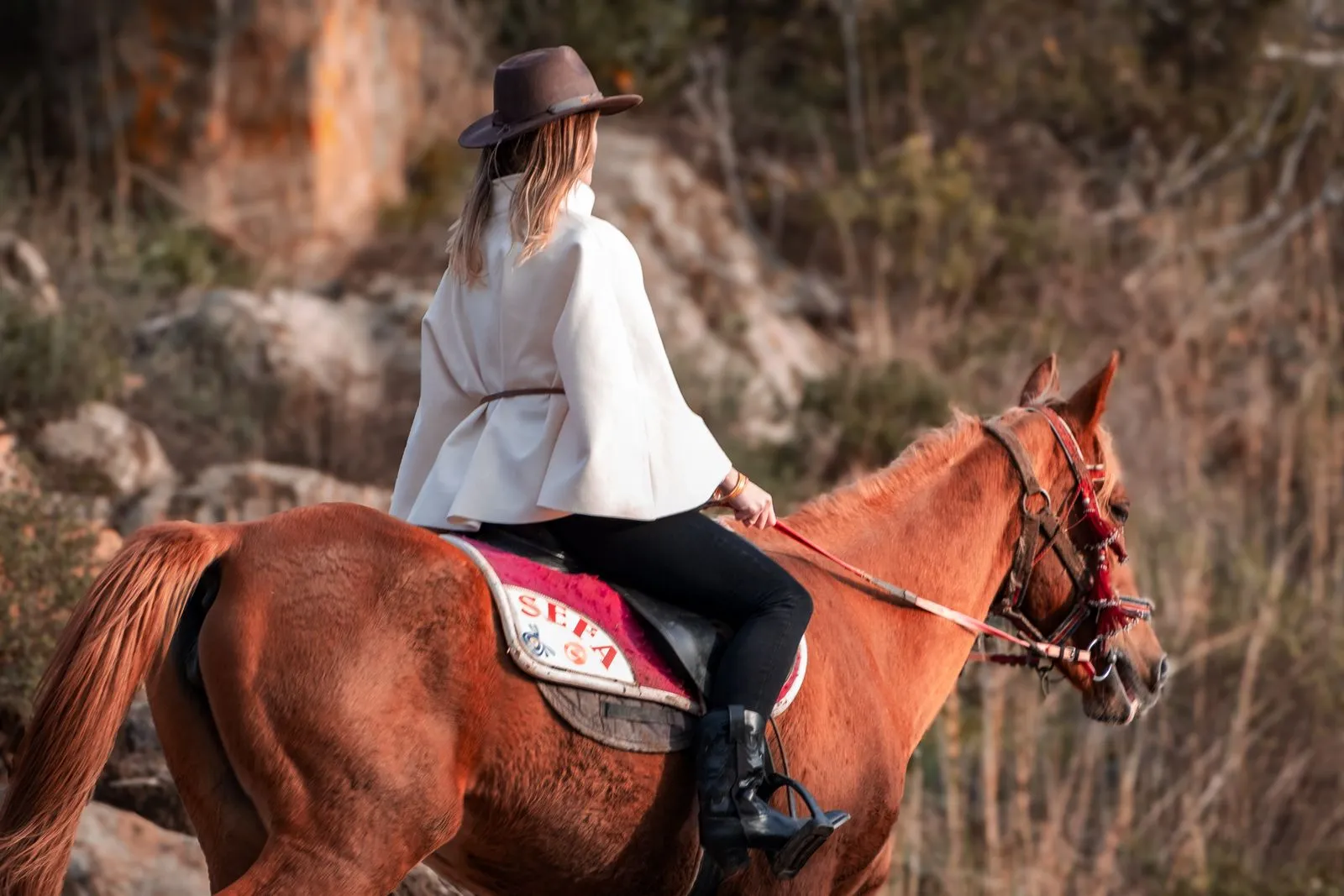
Your first Western riding lesson is easier to enjoy when your clothes let you move comfortably and your footwear works safely with the stirrups. You do not need a full Western wardrobe to get started. Choose sturdy, well-fitting basics, check whether the stable provides a helmet, and ask your instructor about any specific requirements before you go. A little preparation helps you focus on the horse, the directions, and your first ride.
Choose Comfortable, Close-Fitting Clothes
Wear long pants that allow your knees and hips to bend without pulling. Jeans or riding pants are common choices; avoid stiff seams that rub, loose fabric that can catch, and shorts that leave your legs exposed to saddle friction. Choose a shirt that stays tucked or sits securely, with sleeves that will not snag. Bring a light layer if the weather or barn feels cool.
Check the fit before leaving home: sit, squat, and lift each leg as if stepping into a stirrup. Clothes should stay in place and feel comfortable through those movements. Skip dangling scarves, long necklaces, and bulky accessories. Tie back long hair so it stays clear of your face and the horse’s tack.
Wear Boots That Fit the Stirrups
Choose sturdy boots with a closed toe, a defined heel, and a sole that is not overly wide or deeply ridged. The heel helps keep your foot from sliding too far through the stirrup, while a narrow profile makes it easier to place your foot correctly. Ankle-height riding boots or work boots may work if they fit these guidelines.
Avoid sneakers, sandals, clogs, and loose-fitting shoes. They may lack a heel or make it difficult to position your foot safely. If you do not own suitable boots, ask the riding school what footwear it accepts before the lesson; some schools may have loaner options. Do not assume a particular boot style is allowed without checking.
Ask About Helmets and Safety Gear
Wear a properly fitted equestrian helmet that meets the standard accepted by your instructor or stable. A bicycle helmet is not a substitute. Ask whether the school supplies helmets and how it handles fit. If you bring your own, inspect it for damage and make sure it sits level, feels secure, and fastens snugly without pinching.
Follow the instructor’s guidance on any additional protective equipment, such as a safety vest. Keep the helmet fastened while mounted and follow the stable’s rules around horses. Leave earbuds and other distractions behind so you can hear instructions. If you have questions about fit or equipment, ask before mounting rather than adjusting gear once the lesson begins.
Pack a Few Useful Extras
Bring water, sunscreen, and a hair tie if needed, especially for an outdoor lesson. Apply sunscreen before arriving and reapply as directed on the product label. In warm or humid weather, choose breathable clothing and bring a clean shirt for afterward. In rain or changing conditions, ask the school what layers are appropriate and whether the lesson will go ahead.
Keep your pockets light and secure. Put your phone, keys, and loose items somewhere they cannot fall near the horse; ask where to store valuables. Avoid carrying food or treats unless the instructor says it is permitted. Before you leave, confirm the lesson location, arrival instructions, and clothing rules with the school.
For a first Western riding lesson, prioritize long, comfortable pants, secure clothing, and sturdy boots with a defined heel. Confirm helmet requirements and any stable-specific rules before you arrive. Gulfside Western Riding can answer questions about what to bring and how to prepare; contact the school before your lesson.